« Paddle for Peace
Gloucester Harbor »
Arma-Coatings protection
This is not what you may think it is. This is the best way we have found to protect our kayaks, Arma Coatings spray-in bedliner.
A couple of years back I was standing in my driveway, with my kayak on the sawhorses, repairing some of the recent gel coat damage done by slamming a lightweight composite boat on solid rocks in the ocean. I had tried kevlar keel strips in the past but they only worked for abrasion, not slamming and chipping. Then it hit me like a ton of bricks, or should I say logs. My neighbor was hucking firewood into the back of his truck and it was so violent I couldn’t help but notice. I went over to see what damage he was doing to his beloved truck and then I saw his nice new sprayed-in bedliner. Wow, if I only had that on the bottom of my kayak, “bing” the lightbulb went on.
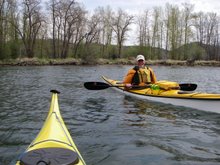
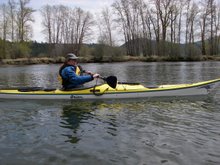
I did a little research and found a local dealer that was willing to experiment on one of my boats. They shot a keel strip on in a couple of hours and I hit the water the same day. What I found was that I could drag, scrape, bounce and abuse the keel of my kayak without a care. It only adds a pound or so of weight and there is not any noticable drag or loss of speed. From that day on we created a trend in our area and the local Arma-Coatings shop has sprayed this polyurethane coating on hundreds of kayaks at $114.00 per boat.
Polyurethanes, and their cousin’s polyureas, are used everywhere. For the purpose of understanding I will refer to these materials as “urethanes”. Urethanes are a family of plastic materials that can be formulated to produce a wide variety of physical properties from soft seat cushions to rigid automotive body panels. Urethanes are a combination of two components, a “resin” and an “isocyanate.” These two materials come together in liquid form and react to form a urethane. The reaction time can be regulated by the addition of catalysts and other ingredients and can vary from a couple of seconds to several hours. Urethanes can be manufactured using two different types of components – aromatic and aliphatic. Aromatic urethanes are more economical and will discolor with exposure to light. Aliphatic urethanes are twice as expensive but will not discolor. Automotive paint is a common example of aliphatic urethane. Virtually all sprayed bedliners use aromatic urethane.
I have looked into many different companies that use a similar product and here is a list: Arma Coatings, Rhino Linings, Armorthane, Line-X, Gator Hyde and more. The only difference is how they prep the surface and spray hot or cold. I have found the smoother finishes to work the best and if they sand the finish off during the prep phase, it will adhere better. I also like it on decks in the high wear areas but it needs to be sprayed on thinner for better results. We have had this spayed on many types of kayaks including; fiberglass, kevlar, carbon kevlar and carbonlite (ABS thermoformed sheet) with great results. Only one of our paddlers had the keel fail and delaminate, it was done by a shop in Nevada that used the cold spray technique with no surface prep or sanding. The best part is all of these products come with a damage warranty and they will do spot repairs for free!
Anyway you slice it… it pays to protect your kayak, and this is a great way, with a reasonable price.
Happy paddling,Captain Penguin
Posted by Garth Schmeck
This entry was posted on Sunday, February 11th, 2007 at 1:15 am and is filed under Technique & Tips